

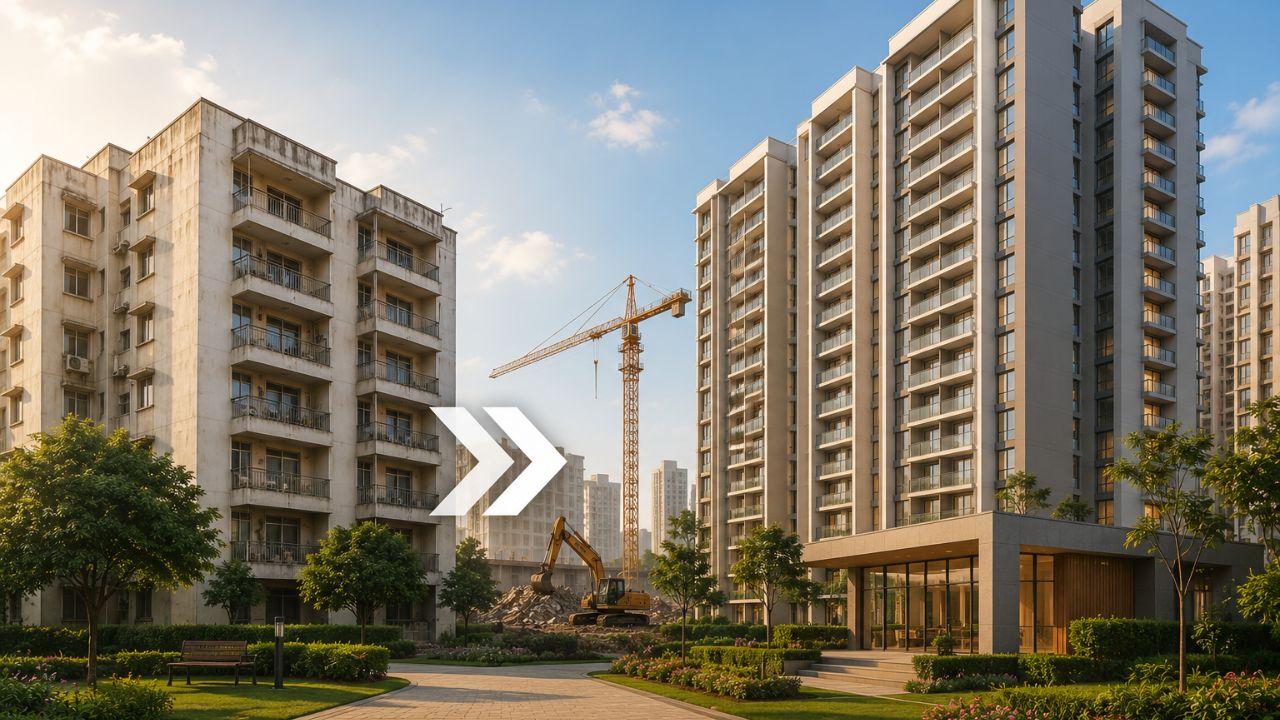
Redevelopment has become one of the most important topics for housing societies across Pune and Mumbai. As cities continue to expand and vacant land becomes increasingly scarce, redevelopment is emerging as a practical solution for replacing ageing buildings with modern residential projects.
As a leading co-operative housing society lawyer in Pune I have noticed that many societies view redevelopment as an opportunity to improve living conditions, upgrade infrastructure, increase property value, and address structural concerns. However, while the benefits of redevelopment are often discussed, the challenges involved in the process are frequently underestimated.
Redevelopment is not merely a construction project. It involves legal, administrative, financial, and organisational considerations that require careful planning and informed decision making.
One of the most common challenges encountered during redevelopment is incomplete or outdated documentation.
Many older buildings have been occupied for decades without completing important formalities relating to society administration, property records, conveyance, or ownership documentation. These issues may remain unnoticed for years but often become significant obstacles when redevelopment is proposed.
Developers typically conduct detailed due diligence before proceeding with a project. Any uncertainty regarding ownership records, conveyance, or society documentation can delay discussions and create complications during the redevelopment process.
A challenge frequently seen in older housing societies is the absence of conveyance.
Many societies continue to occupy and manage their premises for years without securing conveyance of the land and building. In some older projects, the original builder may no longer be actively involved, may have ceased operations, or may not be easily traceable.
When redevelopment discussions begin, societies often realise that important property related matters remain unresolved. This is one of the reasons why conveyance and deemed conveyance have become increasingly important for older housing societies considering future redevelopment.
Another issue seen in some older developments is the absence of a properly constituted housing society.
In certain projects, residents may be living together for many years without establishing a formal co operative housing society structure. While this may not create immediate day to day difficulties, it can become a major concern when redevelopment opportunities arise.
Developers generally prefer dealing with an organised and legally recognised body representing all members. Lack of a formal structure can make communication, decision making, and execution of redevelopment agreements significantly more difficult.
One of the biggest practical challenges in redevelopment is obtaining consensus among society members.
Every member may have different expectations, priorities, and concerns. Some residents may support redevelopment enthusiastically, while others may be reluctant due to uncertainty regarding temporary relocation, project timelines, or financial considerations.
Managing committees often face the difficult task of balancing diverse viewpoints while ensuring that decisions are taken in the best interests of the society as a whole.
Differences of opinion are natural, but prolonged disagreements can slow down or even derail redevelopment proposals.
Redevelopment projects often attract interest from multiple developers.
Society members may receive various promises relating to additional area, amenities, compensation, rental arrangements, and project timelines. While attractive proposals may generate excitement, societies must carefully evaluate the credibility, financial strength, track record, and execution capability of prospective developers.
Selecting a developer based solely on headline offers can expose societies to future risks. Due diligence and professional evaluation play a crucial role in making informed decisions.
Many society members participate in redevelopment discussions without fully understanding the process involved.
Redevelopment typically requires numerous stages, including preliminary discussions, feasibility assessments, member approvals, appointment of professionals, selection of a developer, documentation, regulatory approvals, temporary relocation arrangements, construction, and eventual possession of redeveloped premises.
A lack of awareness can lead to misunderstandings, unrealistic expectations, and avoidable disputes.
Transparency is essential throughout the redevelopment process.
Committee members are entrusted with representing the interests of all residents. Regular communication, proper documentation, transparent decision making, and timely sharing of information help build trust within the society.
Where communication is inadequate, rumours and misunderstandings can quickly create divisions among members.
Redevelopment projects are also subject to various approvals and regulatory requirements.
Obtaining permissions, complying with applicable regulations, coordinating with authorities, and satisfying procedural requirements can take considerable time. Delays in approvals can affect project schedules and create uncertainty among residents.
Societies should therefore approach redevelopment with realistic expectations regarding timelines and procedural requirements.
The demand for redevelopment is expected to increase significantly in the coming years.
Large parts of Pune consist of buildings that are several decades old. At the same time, availability of vacant land continues to reduce. As a result, redevelopment is likely to play an increasingly important role in urban growth and housing development.
Housing societies that proactively address issues relating to conveyance, property records, documentation, and governance will generally be better positioned when redevelopment opportunities arise.
Redevelopment offers substantial benefits, but it also presents complex challenges that require careful planning and informed decision making.
Issues such as incomplete documentation, absence of conveyance, lack of society formation, member consensus, developer selection, transparency, and regulatory compliance can significantly influence the success of a redevelopment project.
Housing societies that prepare in advance, maintain proper records, and seek professional guidance when required are often better equipped to navigate these challenges and make redevelopment a successful transition rather than a prolonged source of uncertainty.